

For many young people in the United Kingdom, the journey from education to employment is not as smooth as it should be. You study hard, earn qualifications, and yet—when it’s time to apply for jobs—you hear the same thing: “You don’t have enough experience.” This is the reality of today’s job market. Employers are not just looking for knowledge; they want candidates who can apply that knowledge in real-world situations. This is exactly where practical training for employment becomes essential. In this blog, we explore how practical training bridges the gap between education and employment, why it matters more than ever in the UK, and how it can transform the future for young job seekers. 1. Introduction The UK job market is facing a growing challenge: a disconnect between education and employment. While many young people are gaining qualifications, employers still struggle to find candidates with the right skills. Recent data shows that youth unemployment in the UK has reached around 15.9%, with 729,000 young people unemployed, highlighting the scale of the issue. At the same time, nearly 957,000 young people are not in education, employment, or training (NEET)—roughly one in eight. These numbers tell a clear story: education alone is not enough. Young people need practical skills, experience, and confidence to succeed. This is why practical training for employment is becoming a critical solution. 2. Understanding the Education to Employment Gap The “education to employment gap” refers to the mismatch between what young people learn in education and what employers expect in the workplace. Many students leave education with: Strong theoretical knowledge Limited practical experience Uncertainty about workplace expectations Meanwhile, employers are looking for: Work-ready skills Problem-solving ability Communication and teamwork Adaptability in real environments This mismatch creates frustration on both sides. Employers struggle to find suitable candidates, while young people struggle to find jobs. Read more: Career Coaching for Students Entering the Job Market 3. What Is Practical Training for Employment? Practical training for employment refers to learning through real-world experience rather than just theory It includes: Work placements and internships Apprenticeships Hands-on training programmes Industry-based projects Simulated workplace environments The goal is simple: prepare individuals for real jobs by giving them real experience. Unlike traditional education, practical training focuses on doing, not just learning. 4. Why Traditional Education Alone Is Not Enough Education plays a vital role in building knowledge, but it often lacks direct exposure to the workplace. According to research, over 37% of unemployed young people in the UK have been out of work for more than six months, showing how difficult it can be to transition into employment. This is often because: Students are not exposed to real work environments There is limited focus on employability skills Career guidance may not be sufficient Without practical experience, many young people feel unprepared for their first job. Read more: Skill Development Courses That Lead to Real Jobs 5. The Role of Practical Training in Building Job-Ready Skills This is where practical training for employment makes a real difference. Through hands-on learning, individuals develop key skills such as: Communication and teamwork Time management Problem-solving Professional behaviour Adaptability These are the exact skills employers are looking for. In fact, UK data shows that around 12% of employers report skills gaps in their workforce, highlighting the need for better training solutions. Practical training helps close this gap by aligning learning with real workplace needs. 6. How Practical Training Builds Confidence Confidence is one of the biggest barriers for young job seekers. Many feel nervous about: Interviews Workplace expectations Communication with colleagues Practical training helps overcome these fears by: Providing real-world exposure Allowing individuals to practice skills Offering feedback and support When young people experience real work environments, they begin to believe in their abilities. Confidence leads to action—and action leads to opportunities. Read more: How Career Development Support Changes Job Prospects 7. Aligning Skills with Employer Demand The UK economy is changing rapidly, with new industries emerging and skills requirements evolving. Government reports show that millions of jobs are concentrated in priority sectors requiring specific skills, emphasising the importance of targeted training. At the same time, research suggests that up to 20% of the workforce could be underskilled by 2030, highlighting the urgency of addressing the skills gap. Practical training for employment ensures that individuals develop the skills that are actually in demand, making them more attractive to employers. 8. The Impact on Youth Employment Practical training has a direct impact on employment outcomes. Young people who participate in hands-on training are more likely to: Secure jobs faster Stay in employment longer Progress in their careers Government initiatives reflect this understanding. For example, a £725 million investment in apprenticeships aims to create more opportunities and connect training with real jobs. This shows that practical training is not just beneficial—it is essential for improving youth employment. Read more: Job Skills Training Programmes for Unemployed Youth 9. How Job Skills Training Association Supports Practical Training At Job Skills Training Association, we are committed to bridging the gap between education and employment through effective practical training for employment. Our programmes provide: Hands-on training and real-world experience Career mentoring and guidance Employability skills development CV and interview preparation Digital and professional skills training Networking opportunities with employers We focus on empowering young people across the UK to build confidence, gain experience, and succeed in their careers. 👉 Explore our programmes here:https://www.jobskillstraining.org.uk/ Your support and donations help us create life-changing opportunities for young people. 10. Summary: Closing the Gap for a Better Future The gap between education and employment is one of the biggest challenges facing young people in the UK today. But it is not an unsolvable problem. Practical training for employment offers a powerful solution by: Bridging the gap between theory and real work Building job-ready skills Boosting confidence and motivation Aligning training with employer needs Improving employment outcomes For young people, it is the key to unlocking opportunities. For employers, it is the key to finding skilled talent. And for

Professional Skills Training for Early Career Professionals
Starting your career is exciting—but let’s be honest, it’s also where reality hits. You may have the qualifications, maybe even some experience, but suddenly the expectations are higher, the competition is tougher, and the workplace demands skills that textbooks never taught you. This is where professional skills training becomes essential. For early career professionals in the United Kingdom, it’s no longer optional—it’s the difference between surviving your first job and actually building a successful career. 1. Introduction The UK job market is evolving rapidly. While opportunities exist, employers are increasingly demanding candidates who are not just qualified, but job-ready. Recent data shows that the UK unemployment rate rose to 5.1% in late 2025, with ongoing pressure in the labour market. At the same time, nearly 12.7% of young people aged 16–24 are not in education, employment, or training (NEET), highlighting challenges in early career transitions. These numbers reflect a clear truth: education alone isn’t enough. Early career professionals need practical skills, adaptability, and confidence—and that’s exactly what professional skills training provides. 2. What Is Professional Skills Training? Professional skills training focuses on developing the abilities needed to succeed in the workplace. Unlike academic learning, it emphasises real-world performance. It typically includes: Communication and interpersonal skills Leadership and teamwork Time management and productivity Problem-solving and critical thinking Workplace etiquette and professionalism Digital and technical competencies These are the skills employers look for when deciding who to hire, promote, or retain. Read more: How Practical Training Bridges the Education to Employment Gap 3. Why Early Career Professionals Struggle Without Training Let’s be blunt—many early career professionals struggle because they’re not fully prepared for the workplace. Common issues include: Difficulty communicating in professional settings Lack of confidence in meetings or presentations Poor time management Limited understanding of workplace culture Research shows that 37% of unemployed young people have been out of work for over six months, indicating how difficult it can be to gain a foothold without the right skills. This is exactly where professional skills training steps in—it fills the gap between education and actual job performance. 4. The UK Skills Gap: A Growing Concern The UK is facing a serious skills shortage across multiple industries. Around 12% of employers report skills gaps in their workforce By 2030, up to 20% of the workforce could be underskilled Entire sectors, like construction, are facing over 140,000 vacancies due to skill shortages This isn’t just an economic issue—it’s a career opportunity. Early career professionals who invest in professional skills training can position themselves ahead of the competition. Read more: Career Coaching for Students Entering the Job Market 5. The Skills That Actually Matter in the Workplace Employers are clear about what they want. It’s not just technical knowledge—it’s how you work, communicate, and solve problems. Communication Clear, confident communication is essential in every role. Teamwork No one works alone anymore. Collaboration is key. Problem-Solving Employers value people who can think, not just follow instructions. Adaptability Industries are changing fast—flexibility is non-negotiable. Digital Skills From basic tools to advanced tech, digital literacy is critical. Professional skills training focuses on these real-world abilities—skills that actually get you hired and promoted. 6. Learning by Doing: The Importance of Practical Training Here’s a fact most people ignore:👉 70% of workplace skills are learned on the job. This means that sitting in lectures won’t prepare you fully. You need: Real-world scenarios Hands-on experience Feedback and improvement That’s why the best professional skills training programmes include practical elements like simulations, projects, and workplace exposure. Read more: Skill Development Courses That Lead to Real Jobs 7. How Professional Skills Training Boosts Career Growth Early career professionals who invest in training don’t just get jobs—they build careers. Training helps you: Perform better in your role Gain recognition from employers Take on more responsibility Progress faster in your career Employees with access to continuous learning are 47% more likely to be engaged at work, which directly impacts performance and career growth. In simple terms: skilled professionals move ahead. Untrained ones stay stuck. 8. The Role of Government and National Initiatives The UK government recognises the importance of skills development and is investing heavily in training. A recent £725 million investment aims to support 50,000 young people through apprenticeships and training programmes, helping them gain job-ready skills. Additionally, initiatives like “Free Courses for Jobs” have already seen over 124,000 enrolments, showing strong demand for skill-based learning. These efforts highlight a clear direction:👉 The future belongs to those who develop practical skills. Read more: How Career Development Support Changes Job Prospects 9. How Job Skills Training Association Supports Early Career Professionals At Job Skills Training Association, we focus on delivering impactful professional skills training that prepares young people for real careers. Our programmes include: ✔ Communication and workplace behaviour training ✔ Leadership and teamwork development ✔ CV writing and interview preparation ✔ Digital and professional skills training ✔ Hands-on learning and real-world experience ✔ Career mentoring and guidance We don’t just teach—we prepare individuals to succeed in real workplaces. 👉 Explore our programmes here:https://www.jobskillstraining.org.uk/ Your support helps us empower young people across the UK with the skills they need to succeed. 10. Summary: Why Professional Skills Training Is Essential The truth is simple: the job market has changed. Degrees alone won’t secure your future. Employers want people who can perform, adapt, and communicate effectively. Professional skills training helps early career professionals: Bridge the gap between education and work Build confidence and workplace readiness Develop in-demand skills Improve career progression Stand out in a competitive job market If you want to succeed—not just survive—in your career, investing in skills is the smartest move you can make. Read more: Job Skills Training Programmes for Unemployed Youth 👉 Visit www.jobskillstraining.org.uk to explore training, mentoring, and career support opportunities. And if you believe in empowering UK youth, consider donating. Your support helps create real opportunities and brighter futures for the next generation. Because in today’s world, skills don’t just matter—they decide your future. 🚀

Career Pathway Programmes Helping Young People Succeed
The reality is simple: the UK job market isn’t getting easier for young people. It’s getting tougher, more competitive, and far more skills-driven than ever before. Right now, nearly one in six young people (16–24) in the UK is unemployed, with rates reaching around 16% in 2025–2026 . On top of that, around 946,000 young people are not in education, employment, or training (NEET) . That’s exactly where career pathway programmes step in — not as a luxury, but as a necessity. These programmes are becoming the backbone of youth employability in the UK, helping young people move from confusion to clarity, and from education to real careers. 1. What Are Career Pathway Programmes? Career pathway programmes are structured journeys that guide young people from learning to employment. They’re not random courses or one-off workshops. Instead, they follow a clear progression: Skills development Career guidance Practical experience Job placement support Unlike traditional education, career pathway programmes are built around real job outcomes, not just qualifications. In short:👉 They show you what to learn, why it matters, and where it leads. 2. Why Career Pathway Programmes Matter More Than Ever in the UK The UK is facing a serious skills gap crisis. By 2030, 20% of the workforce could be underskilled if action isn’t taken . At the same time: Youth unemployment is rising Employers can’t find job-ready talent Traditional education isn’t keeping up This mismatch is exactly what career pathway programmes are designed to fix. They align:👉 What young people learn👉 With what employers actually need Read more: Professional Skills Training for Early Career Professionals 3. The Harsh Reality Young People Face Today Let’s not sugarcoat it. 37% of unemployed young people have been out of work for over 6 months Apprenticeship starts have dropped significantly over the past decade Nearly 1 million young people are not earning or learning This isn’t just a temporary issue — it’s a structural problem. Many young people: Don’t know which career to choose Lack practical experience Have qualifications but no employability skills Career pathway programmes tackle all three. 4. Key Components of Effective Career Pathway Programmes Not all programmes are equal. The ones that actually work include: 1. Skills Training Focus on: Digital skills Business skills Industry-specific knowledge 2. Soft Skills Development Employers want more than qualifications: Communication Problem-solving Adaptability 3. Career Guidance Young people need direction: Career mapping Industry insights Goal setting 4. Real-World Experience This is the game-changer: Internships Live projects Work placements 5. Employability Support CV building Interview preparation Networking 👉 Without these elements, programmes fall flat. Read more: How Practical Training Bridges the Education to Employment Gap 5. How Career Pathway Programmes Bridge the Skills Gap Here’s the blunt truth: 👉 Employers don’t hire degrees. They hire skills. According to UK data, millions of roles are in critical or elevated demand, especially in: Healthcare Digital & tech Business services Skilled trades Career pathway programmes bridge the gap by: Training for in-demand roles Providing hands-on experience Connecting candidates with employers They turn “job seekers” into job-ready professionals. 6. The Role of Apprenticeships and Government Support The UK government is actively backing career pathway initiatives. Recent developments include: £725 million investment in apprenticeships Support for 50,000 young people into jobs and training Local partnerships linking young people with employers This shows one thing clearly: 👉 Career pathway programmes are now a national priority. Read more: Career Coaching for Students Entering the Job Market 7. Why Traditional Education Alone Isn’t Enough Let’s be honest — the old model doesn’t work anymore. University degrees alone don’t guarantee jobs because: They’re often too theoretical They lack practical exposure They don’t adapt quickly to industry changes Meanwhile: Employers want experience Industries are evolving fast AI and automation are changing job roles Career pathway programmes fill this gap by:👉 Combining learning with doing 8. How Career Pathway Programmes Empower Young People The impact goes beyond employment. These programmes help young people: Build confidence Gain clarity about their future Develop independence Become financially stable They also support: Mental wellbeing Social mobility Long-term career growth In short:👉 They don’t just create workers — they build futures. Read more: Skill Development Courses That Lead to Real Jobs 9. The Future of Career Pathway Programmes in the UK This isn’t a trend. It’s the future. With: AI reshaping industries Skills becoming obsolete faster Employers demanding adaptability Career pathway programmes will evolve into: Personalised learning journeys AI-driven career guidance Stronger employer partnerships The organisations that lead this space will define the future workforce. 10. Summary: Why Career Pathway Programmes Are Essential Career pathway programmes are no longer optional — they are essential. They: Reduce youth unemployment Close the skills gap Prepare young people for real careers Support economic growth At a time when: Youth unemployment is rising Skills shortages are increasing Opportunities are uneven 👉 These programmes provide a clear, structured route to success. Read more: How Career Development Support Changes Job Prospects Final Thoughts & Call to Action If the UK is serious about empowering its youth, career pathway programmes must be at the centre of the solution. Organisations like Job Skills Training Association are already doing the groundwork — helping young people gain the skills, confidence, and experience they need to succeed in today’s competitive job market. 👉 Don’t just sit on the sidelines. Explore how you or someone you know can benefit:🌐 https://www.jobskillstraining.org.uk/ And if you believe in building a stronger future for young people in the UK:👉 Support the mission. Donate. Make a difference. Because when young people succeed, the entire country moves forward.
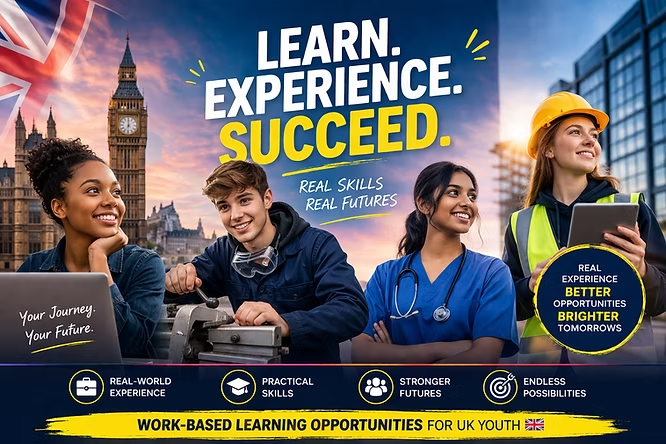
Work-Based Learning Opportunities Helping UK Youth Build Real Careers
The UK job market has changed — and it’s not slowing down. Degrees alone are no longer enough. Employers want experience, adaptability, and real-world skills. That’s where work-based learning opportunities come into play. Across the UK, more young people are turning to hands-on learning routes like apprenticeships, internships, and industry placements to gain a competitive edge. And the numbers don’t lie — in 2024/25, there were over 353,500 apprenticeship starts in England, with participation reaching over 761,000 learners. That’s a clear signal: practical learning is no longer optional — it’s essential. 1. What Are Work-Based Learning Opportunities? Work-based learning opportunities are structured programmes that combine education with real work experience. Instead of learning everything in a classroom, you gain skills while actively working in a real environment. These include: Apprenticeships Internships Work placements Traineeships On-the-job training programmes 👉 The key difference?You don’t just learn — you apply what you learn immediately. 2. Why Work-Based Learning Opportunities Are Growing in the UK There’s a clear shift happening. Graduate hiring has dropped by 8%, while apprenticeship hiring has increased by 8% Employers are actively seeking alternative talent pipelines Skills shortages are forcing companies to rethink hiring This tells you one thing: 👉 Employers are prioritising skills and experience over traditional routes Work-based learning opportunities are filling that gap. Read more: Career Pathway Programmes Helping Young People Succeed 3. The Current Reality for Young People Let’s be direct — many young people are struggling to break into the workforce. Over 37% of unemployed youth have been out of work for 6+ months Many lack practical experience Others have qualifications but no job-ready skills This creates a cycle:👉 No experience → No job → No experience Work-based learning opportunities break that cycle. 4. Types of Work-Based Learning Opportunities Available There’s no one-size-fits-all approach. The UK offers multiple pathways: Apprenticeships Earn while you learn Available from Level 2 to degree level 93% of apprentices sustain employment after completion Internships Short-term industry exposure Great for testing career interests Work Placements Often part of education programmes Provide structured experience Traineeships Focus on preparing young people for apprenticeships or jobs 👉 Each option provides a stepping stone into employment. Read more: Professional Skills Training for Early Career Professionals 5. Key Benefits of Work-Based Learning Opportunities These programmes aren’t just helpful — they’re powerful. Real Experience You gain hands-on exposure, not just theory. Earn While You Learn Many programmes (like apprenticeships) pay you. Better Job Prospects Employers prefer candidates with experience. Faster Career Progression You start building your career earlier. Skill Development Both technical and soft skills improve significantly. 👉 Bottom line:You become job-ready, not just qualified. 6. Industries Offering Strong Work-Based Learning Opportunities The UK job market is full of opportunities — if you know where to look. Top sectors include: Digital & Technology (rapid growth, +17% increase in starts) Healthcare & Social Care Business & Administration (most popular sector) Construction & Engineering Creative Industries 👉 These industries are actively investing in young talent. Read more: How Practical Training Bridges the Education to Employment Gap 7. Apprenticeships: The Backbone of Work-Based Learning Apprenticeships deserve special attention because they dominate the space. Over 142,000 starts recorded early in 2025/26 alone Higher-level apprenticeships are growing rapidly Degree apprenticeships are closing the salary gap with graduates Even more interesting:👉 Apprenticeship salaries have risen significantly, making them a serious alternative to university. 8. Why Employers Value Work-Based Learning Employers aren’t just supporting these programmes — they depend on them. Why? They get job-ready employees Training is aligned with business needs Reduced hiring risks Stronger employee retention In fact, many companies now prefer:👉 Hiring someone trained through work-based learning rather than starting from scratch. Read more: Career Coaching for Students Entering the Job Market 9. Challenges and Barriers Young People Face Despite the benefits, there are still obstacles: Lack of awareness about opportunities Competition for top placements Limited guidance in schools Confidence issues This is where organisations like Job Skills Training Association step in — providing structured support, guidance, and access to real opportunities. 👉 Without guidance, many young people miss out entirely. 10. The Future of Work-Based Learning Opportunities in the UK This is not a temporary trend — it’s the future of education and employment. With: AI reshaping industries Skills becoming outdated faster Employers demanding adaptability Work-based learning opportunities will become: More personalised More digital More integrated with industry 👉 The line between learning and working is disappearing. Read more: Skill Development Courses That Lead to Real Jobs 11. Summary: Why Work-Based Learning Opportunities Matter Work-based learning opportunities are one of the most effective solutions to youth unemployment in the UK. They: Bridge the gap between education and employment Provide real-world experience Improve employability Support economic growth At a time when traditional pathways are struggling to keep up, these programmes offer a clear, practical route to success. Final Thoughts & Call to Action If you’re a young person in the UK trying to figure out your next step — don’t wait around hoping things will fall into place. 👉 Take action. Explore real opportunities. Work-based learning opportunities can transform your future — but only if you take the first step. 🌐 Discover programmes, training, and career support here: https://www.jobskillstraining.org.uk/ 💙 And if you believe in empowering the next generation:👉 Support the mission. Donate. Help create real opportunities for UK youth. Because when young people gain skills, experience, and confidence — they don’t just find jobs…👉 They build careers.

Mentoring and Training for Youth: How They Improve Employability in the UK
The UK job market is evolving fast — and for young people, that means one thing: you need more than qualifications to succeed. Employers are looking for confidence, real-world skills, and the ability to adapt. This is exactly where mentoring and training for youth make a real difference. Right now, the challenge is significant. Nearly 948,000 young people aged 16–24 in the UK are not in education, employment or training (NEET) — roughly 1 in 8 young people . That’s not just a statistic — it’s a clear signal that traditional pathways alone aren’t working. Mentoring and training are stepping in to bridge that gap — helping young people move from uncertainty to opportunity. 1. What Is Mentoring and Training for Youth? Mentoring and training for youth combines two powerful elements: Mentoring: Guidance from experienced individuals who provide advice, support, and direction Training: Structured learning to build practical, job-ready skills Together, they create a complete development system:👉 Learn the skills → Get guidance → Apply in real life This combination is what turns potential into performance. 2. Why Mentoring and Training Matter More Than Ever The UK is facing a growing disconnect between education and employment. Employers struggle to find job-ready candidates Young people struggle to gain experience Competition for entry-level roles is increasing At the same time, the government is investing heavily in youth support: £820 million funding package to support nearly 1 million young people into jobs and training This shows one thing clearly: 👉 Mentoring and training for youth are now essential, not optional. Read more: Work-Based Learning Opportunities Helping UK Youth Build Real Careers 3. The Real Challenges Young People Face Let’s be honest — the transition from education to employment is not smooth. Young people often face: Lack of career direction Limited work experience Low confidence Poor access to professional networks On top of that, long-term unemployment is rising, and many young people are stuck without clear pathways. 👉 Without support, many remain stuck in the cycle of:No experience → No job → No experience Mentoring and training break that cycle. 4. How Mentoring Builds Confidence and Direction Confidence is often the missing piece. Research shows: 87% of mentees report increased confidence and empowerment 97% find mentoring valuable That’s not surprising. A good mentor helps you: Understand your strengths Set realistic career goals Avoid common mistakes Stay motivated 👉 Sometimes, the right guidance matters more than another qualification. Read more: Career Pathway Programmes Helping Young People Succeed 5. The Role of Training in Developing Job-Ready Skills Mentoring provides direction — but training provides the tools. Effective mentoring and training for youth focus on: Technical Skills Digital literacy Industry-specific knowledge Practical job skills Soft Skills Communication Teamwork Problem-solving Time management These are exactly the skills employers demand — and often complain are missing. 👉 Training turns knowledge into capability. Read more: Professional Skills Training for Early Career Professionals 6. The Combined Power: Why Mentoring + Training Works Best Here’s the reality: 👉 Training without mentoring = skills without direction👉 Mentoring without training = advice without action When combined, they create: Clarity + capability Confidence + competence Learning + real-world application Studies show mentoring also improves: Decision-making Leadership Emotional resilience This combination produces well-rounded, employable individuals. Read more: How Practical Training Bridges the Education to Employment Gap 7. Real Impact on Youth Employability The impact goes beyond theory. Mentoring and training programmes: Improve employment outcomes Increase long-term career stability Enhance workplace readiness They also contribute to: Reduced crime and risky behaviour (mentoring reduces offending rates) Better mental wellbeing Stronger social integration 👉 This isn’t just about jobs — it’s about building better futures. 8. The Role of Organisations in the UK Organisations like Job Skills Training Association play a crucial role in delivering: Career mentoring Skills training programmes Work experience opportunities Employability support Across the UK, similar initiatives are helping thousands of young people: Build confidence Gain practical experience Access real job opportunities 👉 Without these organisations, many young people would be left behind. Read more: Career Coaching for Students Entering the Job Market 9. Challenges That Still Need to Be Addressed Despite the benefits, there are still gaps: Not enough awareness of available programmes Limited access in some regions Inconsistent quality of mentoring Lack of long-term support Even government programmes can only reach a portion of those in need. 👉 That’s why expanding mentoring and training for youth is critical. 10. The Future of Mentoring and Training for Youth in the UK The future is clear — and it’s evolving. We’re moving towards: Personalised mentoring pathways Digital and hybrid training models Stronger employer partnerships Skills aligned with AI and future jobs As industries change, mentoring and training will become even more important. 👉 The young people who succeed will be those who adapt — and get the right support early, Read more: Skill Development Courses That Lead to Real Jobs 11. Summary: Why Mentoring and Training Are Game-Changers Mentoring and training for youth are among the most powerful tools to improve employability in the UK. They: Build confidence and direction Develop real-world skills Bridge the gap between education and employment Support long-term career success At a time when: Youth unemployment is rising Skills gaps are widening Opportunities are uneven 👉 These programmes provide a clear path forward. Final Thoughts If you’re a young person in the UK trying to figure out your next step — don’t wait for opportunities to come to you. 👉 Go where the support is. Mentoring and training for youth can transform your future — giving you the skills, confidence, and direction you need to succeed. 🌐 Explore programmes and opportunities here: www.jobskillstraining.org.uk 💙 And if you believe in empowering the next generation:👉 Support the mission. Donate. Help create life-changing opportunities for UK youth. Because when young people are guided, trained, and supported —👉 They don’t just find jobs… they build meaningful careers.
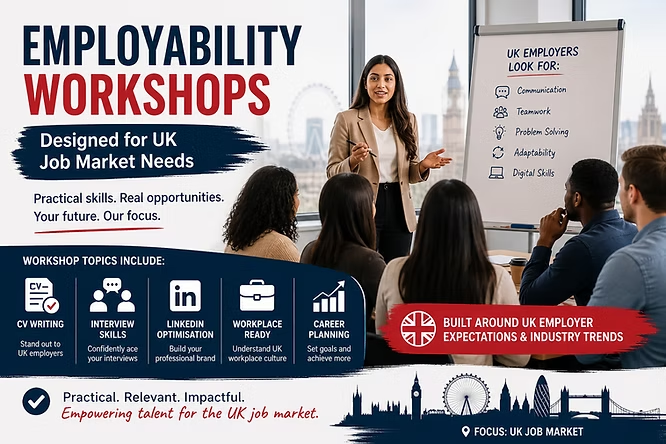
Employability Workshops Designed for UK Job Market Needs
The UK job market is changing faster than most young people can keep up with. Degrees alone don’t guarantee jobs anymore. Employers are demanding practical skills, confidence, and real-world readiness — and that’s exactly where employability workshops come in. Right now, the challenge is clear. Around 957,000 young people aged 16–24 in the UK are not in education, employment, or training (NEET) — roughly 12.8% of all young people . That’s not just a statistic — it’s a wake-up call. Employability workshops are emerging as one of the most effective ways to bridge this gap, helping young people move from uncertainty to opportunity. 1. What Are Employability Workshops? Employability workshops are structured training sessions designed to prepare individuals for the workplace. They go beyond theory and focus on: Practical job skills Career readiness Real-world application These workshops typically include: CV writing and personal branding Interview preparation Communication and teamwork training Industry-specific skill development 👉 In simple terms: They teach you how to actually get and keep a job. 2. Why Employability Workshops Are Essential in the UK Today The UK is facing a growing mismatch between education and employment. Youth unemployment stands at around 15–16% Employers report difficulty finding job-ready candidates Many young people lack workplace experience At the same time, economic inactivity among young people has increased significantly over the years . 👉 This creates a clear gap: Young people are educated — but not employable. Employability workshops are designed to close that gap. Read more: Mentoring and Training for Youth: How They Improve Employability in the UK 3. The Skills Gap: The Real Problem Behind Youth Unemployment Let’s be honest — the issue isn’t just unemployment. It’s unpreparedness. Many young people: Have qualifications but lack practical skills Struggle with communication and confidence Don’t understand employer expectations According to UK research, improving youth employability could boost the economy by £13–26 billion annually . 👉 That shows how critical this issue is — not just for individuals, but for the entire country. 4. What Do Employability Workshops Actually Teach? Good employability workshops are practical, not theoretical. Core Areas Covered: 1. CV and Personal Branding Writing professional CVs Building LinkedIn profiles Presenting yourself effectively 2. Interview Skills Mock interviews Answer structuring Confidence building 3. Workplace Skills Communication Teamwork Problem-solving 4. Digital Skills Basic tech tools Online communication Digital workplace readiness 👉 These are exactly the skills employers are looking for. Read more: Work-Based Learning Opportunities Helping UK Youth Build Real Careers 5. Why Young People Benefit So Much from Employability Workshops Here’s the truth: 👉 Most young people don’t fail because they lack intelligence — they fail because they lack guidance. Employability workshops help by: Providing clarity on career paths Building confidence Offering real-world insights Reducing fear of the job market They turn:👉 “I don’t know what to do”into👉 “I know exactly what my next step is” 6. The Role of Employers in Shaping Employability Workshops Employers are no longer passive observers — they are actively influencing training. Why? They want job-ready candidates Training reduces hiring risks It improves retention Many workshops are now designed in collaboration with employers to ensure:👉 Skills taught = Skills needed This alignment is what makes employability workshops so effective. Read more: Career Pathway Programmes Helping Young People Succeed 7. The Rise of Practical Learning in the UK The UK is shifting towards practical, skills-based learning. Initiatives now focus on: Apprenticeships Vocational training Hands-on learning programmes The Youth Opportunity Index shows significant regional differences in access to opportunities, highlighting the need for targeted support . 👉 Employability workshops play a key role in ensuring equal access to career preparation. 8. Barriers Preventing Young People from Accessing Employability Workshops Despite their importance, many young people still miss out. Common Barriers: Lack of awareness Limited access in certain regions Financial constraints Low confidence or motivation Additionally, rising mental health challenges are becoming a major barrier to employment participation . 👉 This is why accessible and supportive programmes are crucial. Read more: Professional Skills Training for Early Career Professionals 9. How Organisations Are Making a Difference Organisations like Job Skills Training Association are stepping in to fill the gap by offering: Structured employability workshops Mentoring and guidance Work experience opportunities Career support services These initiatives are helping young people: Build confidence Gain practical skills Transition into employment 👉 Without these programmes, many young people would remain stuck. 10. The Future of Employability Workshops in the UK The future of work is evolving — and so are employability workshops. We’re moving towards: Personalised learning experiences AI-driven career guidance Hybrid (online + offline) workshops Stronger industry partnerships With AI impacting nearly all job roles to some extent, adaptability and continuous learning are becoming essential . 👉 The future belongs to those who are prepared — not just qualified. Read more: How Practical Training Bridges the Education to Employment Gap 11. Summary: Why Employability Workshops Matter Employability workshops are not just helpful — they are essential. They: Bridge the gap between education and employment Equip young people with real-world skills Improve confidence and career clarity Support economic growth At a time when: Youth unemployment is rising Skills gaps are widening Opportunities are uneven 👉 These workshops provide a clear, structured path forward. Final Thoughts & Call to Action If you’re a young person in the UK trying to figure out your next step — don’t rely on guesswork. 👉 Get the right support. Build the right skills. Employability workshops can transform your future by giving you the confidence, experience, and direction you need to succeed. 🌐 Explore programmes and opportunities here: https://www.jobskillstraining.org.uk/ 💙 And if you believe in empowering the next generation:👉 Support the mission. Donate. Help create real opportunities for UK youth. Because when young people are prepared, supported, and empowered —👉 They don’t just find jobs… they build lasting careers.

10 Proven Mentoring Strategies for Youth to Succeed in Their Careers
The path from education to employment is full of uncertainty for many young people. They face the pressures of a competitive job market, the need for new skills, and the challenge of finding opportunities. One solution stands out above all others: mentoring strategies for youth. Effective mentoring bridges the gap between potential and achievement. It gives young people the confidence, knowledge, and connections they need to move forward. In this article, we explore 10 proven mentoring strategies for youth that truly transform lives and careers. Get Job Skills Training – Secure A Career 1. Setting Clear Goals with Young People A strong start is essential. One of the most important mentoring strategies for youth is helping them define their career goals. Whether it’s improving interview skills or securing an apprenticeship, clear objectives guide the mentoring journey and give structure to every session. 2. Encouraging Reflection and Personal Growth Good mentors do not just provide answers; they ask questions. Encouraging self-reflection helps young people evaluate their strengths, weaknesses, and aspirations. This mentoring strategy for youth builds self-awareness and fosters a growth mindset that employers value highly. 3. Building Confidence Through Positive Reinforcement Confidence is often the missing link between talent and opportunity. One of the simplest yet most powerful mentoring strategies for youth is celebrating small wins. Recognising achievements motivates mentees to take bold steps, such as applying for roles or presenting ideas in interviews. 4. Developing Soft Skills Alongside Technical Knowledge Employers consistently highlight communication, teamwork, and adaptability as top priorities. Therefore, mentoring strategies for youth must focus on building both soft and technical skills. By balancing these two, young people become more employable and workplace-ready. 5. Creating Access to Networking Opportunities Connections are often as valuable as qualifications. A key mentoring strategy for youth is introducing them to professional networks, events, and organisations. Networking exposes them to opportunities and builds their confidence in professional environments. 6. Sharing Real-Life Career Experiences Textbook lessons alone are not enough. Mentors who share personal career journeys provide powerful insights. These real stories form one of the most practical mentoring strategies for youth, showing that success often comes through resilience, learning, and adaptation. 7. Promoting Lifelong Learning Habits The job market is constantly evolving. That’s why effective mentoring strategies for youth emphasise continuous learning. Encouraging online courses, certifications, and workshops ensures young people remain adaptable and competitive in the future of work. 8.Giving Constructive Feedback with Action Plans Constructive feedback is essential for progress. Among the best mentoring strategies for youth is balancing encouragement with clear, actionable guidance. For example, offering specific advice on CV improvement or interview technique gives young people tangible steps forward. 9. Modelling Professional Behaviour and Ethics Mentors serve as role models. One of the most powerful mentoring strategies for youth is demonstrating professionalism, integrity, and strong work ethics. Young people absorb these qualities, shaping them into reliable and respected professionals. 10. Celebrating Milestones and Achievements Progress should never go unnoticed. A vital mentoring strategy for youth is recognising milestones – from completing training programmes to landing first job interviews. Celebrating these wins boosts confidence and inspires persistence. Summary From setting goals and providing feedback to building confidence and networks, these 10 mentoring strategies for youth are proven methods to help young people succeed in their careers. Mentors who implement these approaches not only transfer knowledge but also empower the next generation to thrive in a competitive world. At Job Skills Training Association, we believe every young person deserves guidance, opportunity, and support to succeed. Our mentoring programmes, skills training, and career workshops are tailored to empower youth with the confidence and skills needed for meaningful employment. 👉 Learn more and connect with us today at www.jobskillstraining.org.uk. Together, we can shape brighter futures. Career Guidance & Mentoring